Article
How to Use MyLinedChart to Build a DCF Thesis Map
Use MyLinedChart as the thesis and evidence layer around a DCF model so valuation assumptions, fair value zones, catalysts, and review notes stay connected to price.

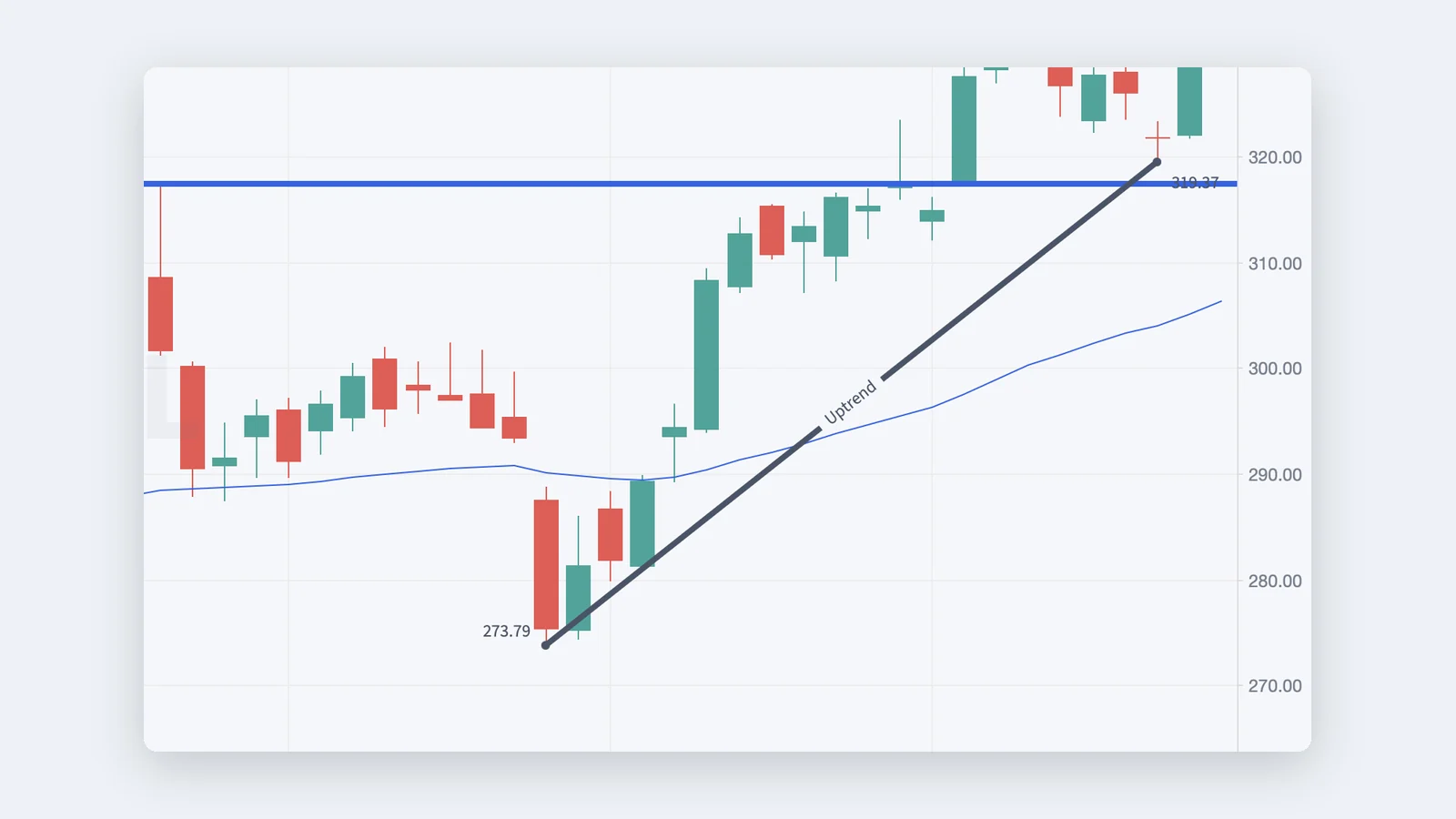
A DCF model belongs in a spreadsheet, but the investment thesis does not live only in cells. Fundamental traders also need to see where price sits relative to intrinsic value, what assumptions support the case, what catalyst could change the model, and when the thesis was last reviewed. MyLinedChart can be the visual thesis map around that work.
Quick Answer
A DCF thesis map is a visual operating layer around the valuation model. The spreadsheet calculates intrinsic value. MyLinedChart helps organize the assumptions, fair value zones, catalysts, and review notes that explain how a fundamental investor should use that value.
This is not about turning a fundamental trader into a technical trader. It is about making the valuation thesis visible enough to review when price, earnings, guidance, or sentiment changes.
DCF Thesis Map Workflow
Start with the core model outputs: bear case, base case, bull case, and margin-of-safety price. Then place those outputs into a chart workflow where the investor can see whether the market is offering value, confirming risk, or forcing a thesis review.
The strongest setup keeps model assumptions separate from price behavior while still showing how the two interact.
| DCF Layer | MyLinedChart Use | Review Question |
|---|---|---|
| Revenue growth | Add assumption note | What growth rate supports this fair value? |
| Operating margin | Tag margin sensitivity | What margin change would break the case? |
| Discount rate | Note risk regime | Is the required return still realistic? |
| Terminal value | Label long-term assumption | Is the terminal case too optimistic? |
| Fair value range | Draw bear, base, and bull zones | Where is price relative to intrinsic value? |
| Catalyst | Attach catalyst note to price zone | What event should trigger a model update? |
Where the Model Ends
The model should handle cash flows, discount rates, terminal assumptions, shares, and sensitivity tables. MyLinedChart should handle the decision context around the model: price zones, notes, catalysts, review dates, and thesis state.
That split keeps the workflow honest. The investor can still update the spreadsheet when the numbers change, but the chart keeps the decision history visible.
- Spreadsheet: calculates fair value.
- MyLinedChart: maps fair value to current price.
- Spreadsheet: updates model assumptions.
- MyLinedChart: tracks when and why assumptions changed.
- Spreadsheet: stores formulas.
- MyLinedChart: stores investor decision context.
Common Mistakes
The first mistake is treating a single DCF output as a precise target instead of a range. The second mistake is forgetting which assumptions created that output. The third mistake is letting price movement rewrite the thesis after the fact.
A thesis map reduces those errors by forcing each valuation zone to carry its assumption context.
Next Step
After the thesis map is built, use DCF Models Are Only Useful If You Track the Assumptions to track assumption drift and Price vs Intrinsic Value: How to Track DCF Upside on a Chart to organize price versus intrinsic value.
Nothing here is personalized financial advice. The purpose is to make a fundamental investor workflow more reviewable.
FAQ
Can MyLinedChart build a DCF model?
No. A DCF model should be built in a spreadsheet or financial modeling tool. MyLinedChart helps organize the thesis, price zones, catalysts, and review notes around that model.
Why would a fundamental investor use a chart for DCF work?
A chart helps show where price sits relative to intrinsic value, margin of safety, catalyst zones, and thesis review levels.
What should go on a DCF thesis map first?
Start with bear, base, and bull fair value zones, the margin-of-safety level, the key assumptions, and the next earnings or catalyst review date.
Sample Structured Chart-Data Exports
Review how chart drawings, annotations, OHLC, volume, and execution context become reusable structured data.